PROVEN IMPACT
Trusted results at scale
On fully personalized web layers vs. site average
On web personalization, calculated by Dr.Max
On Dr.Max private-brand recommendations vs. baseline
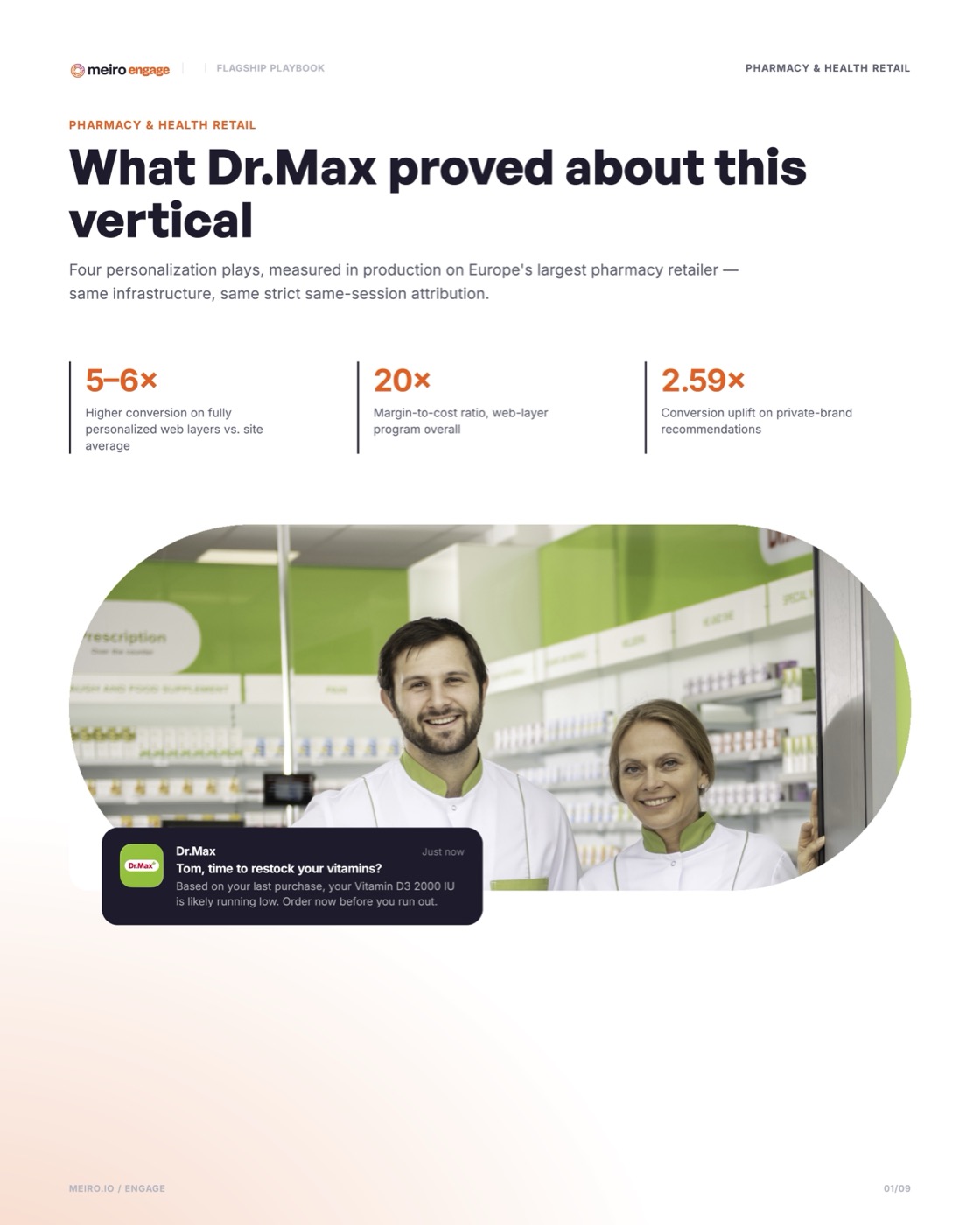
Get the Dr.Max Flagship Playbook
The exact plays behind the 5–6x conversion uplift in this case study — packaged so your team can run them.
ABOUT THE CLIENT
One of Europe's Largest Pharmacy Retail Chains
Dr.Max Group is one of Europe's leading pharmacy networks, operating a large network of physical pharmacies and a major e-commerce business across 18 European countries. Meiro powers personalization in five of those markets: Czech Republic, Poland, Italy, Romania, and Slovakia. By the time the personalization program launched, the business had built something valuable: years of transaction history and a loyal registered customer base. But most web visitors arrive anonymously. Without the infrastructure to recognize behavioral signals in real time, that historical data couldn't influence the live experience, and every visitor got the same page.

THE CHALLENGE
The Starting Point: When Basic Personalization Was No Longer Enough
Before Meiro, personalization on the Dr.Max website was limited to what traditional vendors offer: last-viewed items, generic recommendations, static widgets. Valuable behavioral signals from the marketing stack were not yet shaping the customer experience.
Category pages were still managed manually, often reflecting vendor partnerships and commercial priorities. That worked when the catalog was smaller. But as it grew, it became harder to surface the right products for the right customer at the right moment.

Anonymous visitors, invisible intent
98–99% of visitors don't log in during browsing, even when they're returning customers. Without real-time identity resolution, they never connected to their purchase history, so every visit started from zero.
Category pages managed manually
Category pages were curated by hand, often around vendor priorities. At 100,000+ SKUs, the right product rarely reached the right customer at the right moment.
Behavioral signals were not captured or activated effectively
Product interest, cart behavior, and replenishment timing all hinted at what customers needed next. Without a single customer view, none of it was actionable in real time.
PERSONALIZATION IN ACTION
A Three-Tier Ecommerce Personalization Model
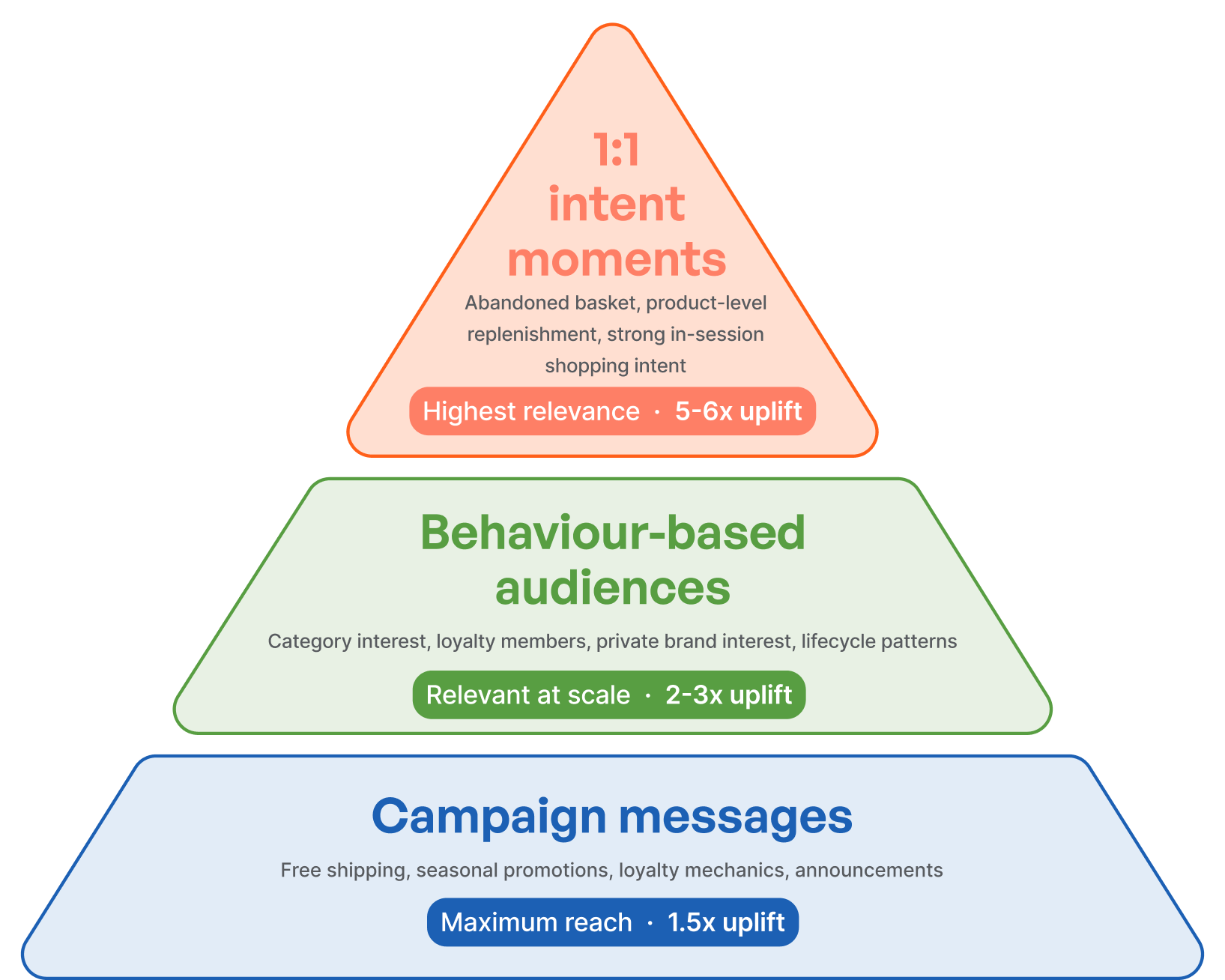
Dr.Max needed a personalization model that balanced customer relevance, commercial priorities, and the realities of regulated retail. The web layer portfolio was built around three levels of intent, with the most personalized formats delivering the highest conversion uplift.
 Bottom-right pop-up
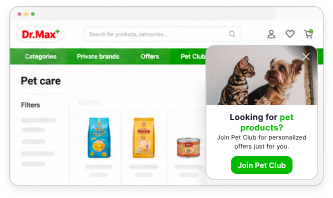 In-page card / pop-up
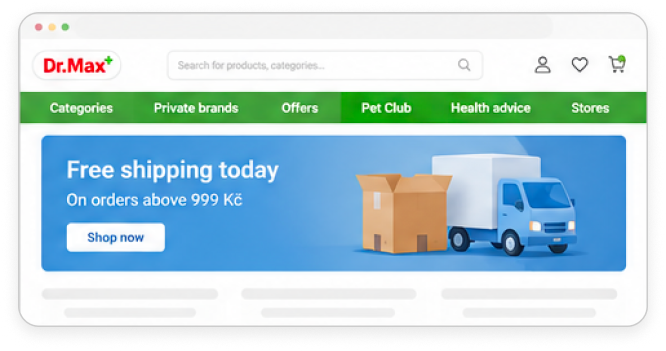 Wide banner
THE DISCIPLINE BEHIND THE NUMBERS
Revenue Attribution: The Strictest Rules in the Category
Attribution that earns trust
Most CDP implementations claim attribution. Dr.Max applies it in the strictest form in the category. A Meiro-attributed sale is counted only when all three conditions are met simultaneously:
Click-in-session
The recommended product was clicked in the same session as the impression. No multi-day windows.
Purchase-in-session
The purchase was completed in the same session as the click. No attribution across visits.
Same product
Only the exact product clicked is counted. Cross-sells and add-ons are excluded entirely.

Governance that protects the experience
One web layer per five page views
A 20% impression-rate ceiling keeps personalization useful, not overwhelming.
Overexposure is penalized
If a campaign exceeds the cap, attributed revenue is reduced in reporting. The system encourages teams to self-police.
Personalized formats get priority
Higher-converting, higher-AOV formats are served first. Broad-reach campaigns fill only the remaining inventory.
"The real value is the combination of performance and speed. We can identify a new opportunity, build the right attribute or audience, and have it live within days. Speed is what turns a strategy into something live. You don't need a sprint, a dev ticket, or a sign-off meeting. You just build and ship."

Michal Cerman
Group Product Owner, Personalization, Dr.Max BDC
PERSONALIZATION IN PRODUCTION
The Use Cases Behind the Numbers
Four web-layer formats running in production, all measured under the same same-session, same-product attribution rules. Select a use case to see how it works.
1:1 Intent Moment · Highest Relevance
Abandoned Cart Recovery: 5–6x Higher Conversion
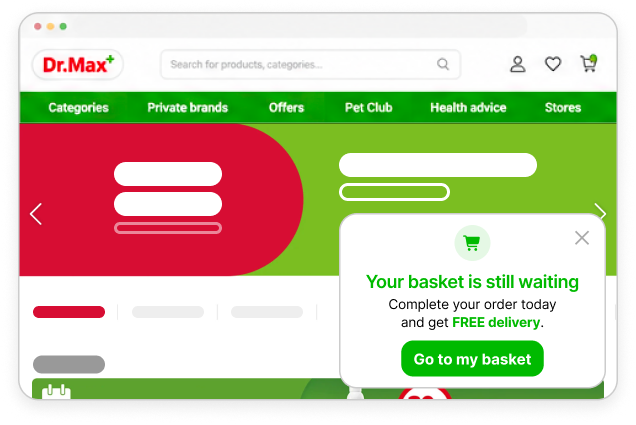
Why it matteredWhen a returning customer visited the site, added products to their basket, and left without completing the purchase, Dr.Max had a short window to act. The objective was to recognize returning customers immediately and remind them of the products they had already selected, while offering a relevant incentive to complete their order.
How it worksMeiro's customer data platform identifies the customer when they return to the website, matches them to their pending basket, and triggers a personalized web layer in real time. The message is simple and specific: the basket is still waiting, supported by a time-limited free delivery offer. Once the basket is completed or cleared, the trigger stops automatically.
Results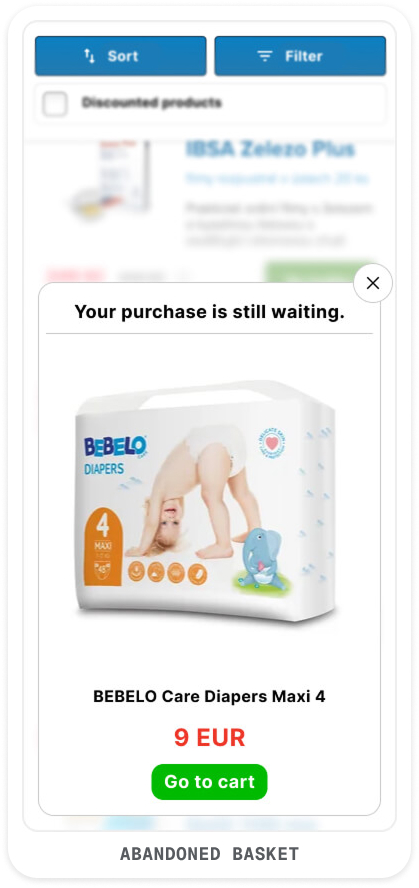
1:1 Intent Moment · Product-Level Timing
Replacing Guesswork With Product-Level Replenishment Signals
Why it matteredThe objective was to reach customers at the moment replenishment became relevant: not too early, when the message would be ignored, and not too late, when the purchase may have already happened elsewhere. Instead of relying on a fixed "30 days after purchase" rule, Dr.Max needed timing that reflected the actual product and customer behavior.
How it worksReplenishment windows are calculated per SKU using a consumption model built in Azure Databricks and activated through Meiro CDP. When a customer enters the replenishment window for a product they previously purchased and visits the website, that exact product is surfaced through a web layer. Outside the window, nothing appears, keeping impressions low and relevance high.
Results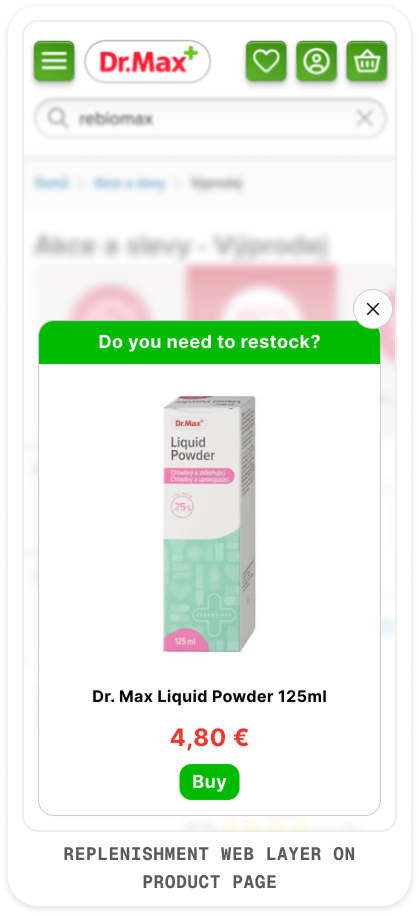
Behaviour-Based Audience · Relevant at Scale
The Recommendation That Arrives Before the Decision Is Made
Why it matteredMost personalization reacts after a customer has made their intent obvious: a search, a product view, or an item added to the basket. Dr.Max wanted to act earlier in the journey by detecting meaningful browsing behavior while the customer was still comparing options and discovering products.
How it worksMeiro CDP monitors real-time behavioral signals such as browsing patterns, search queries, and category dwell time. When a customer shows strong interest in a category, such as sun care, cold remedies, or dermocosmetics, a contextual web layer surfaces relevant product recommendations during the same session.
Results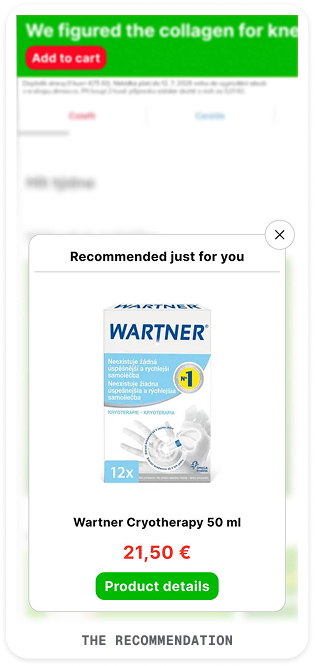
Behaviour-Based Audience · Highest Margin
Matching Customer Intent With Higher-Margin Private-Brand Recommendations
Why it matteredThe objective was not to push private-brand products broadly. It was to surface them at the right moment, when a customer was already browsing a category where a Dr.Max private-brand alternative was relevant and commercially meaningful.
How it worksCategory affinity signals trigger a web layer promoting a relevant Dr.Max private-brand equivalent when a customer is browsing a category where own-label products compete. The logic runs across all five markets and is based on customer behavior, not manual campaign selection.
Results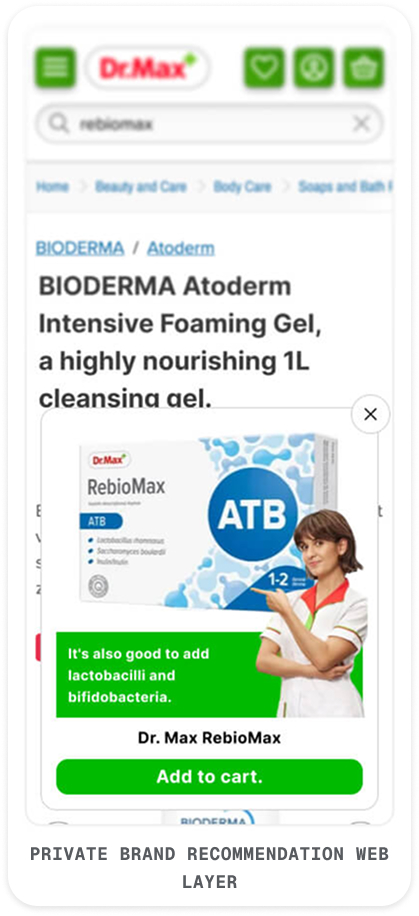
FAQ
Frequently Asked Questions
What conversion uplift can ecommerce personalization deliver?
Dr.Max measured 5–6x higher conversion on fully personalized web layers vs site average, measured under same-session, same-product attribution. The more specific the customer moment (abandoned basket, replenishment window), the higher the uplift.
What is a CDP for ecommerce used for?
Unifying customer identity across sessions and channels, then activating it: on-site personalization, abandoned cart recovery, replenishment triggers, and audience sync to email and paid media. For Dr.Max, Meiro's customer data platform unified five markets under one identity layer and one execution layer.
How did Dr.Max measure revenue attribution?
Only same-session, same-product, click-then-buy purchases counted: no halo revenue, capped impression frequency. Most CDPs would attribute the entire cart; Dr.Max attributed one line item. The 5–6x uplift is measured against that standard. It is the floor, not the ceiling.
Does this work with a composable CDP setup?
Meiro runs as a full-stack or composable CDP. Dr.Max feeds it from its own models. The customer data platform handles identity resolution and activation; the predictive modeling can come from your existing data infrastructure.
What are the best website personalization tools for regulated industries?
Ones with consent-first data foundations. Dr.Max only activates consented signals, which is why the program survived pharmacy-grade compliance review. In regulated markets, the data foundation matters as much as the activation layer.
WANT THIS ON YOUR ECOMMERCE SITE?
Turn Customer Data Into a Margin-Printing Engine
Meiro CDP runs the personalization, identity, and attribution layer powering Dr.Max across five markets and dozens of other category leaders in regulated and complex retail environments. Same data sovereignty. Same execution speed. Same kind of numbers.
Customer success stories
See all stories →-
 New
E-commerce
New
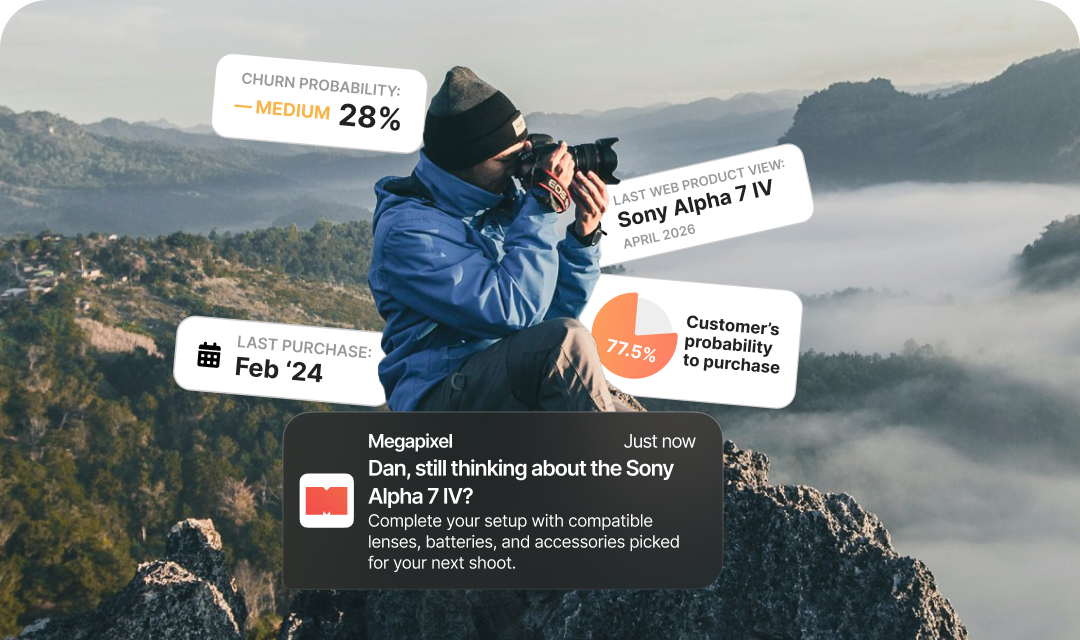
E-commerceHow Megapixel Makes Every Photographer Feel Like a Regular
Read the success story → -
 Travel
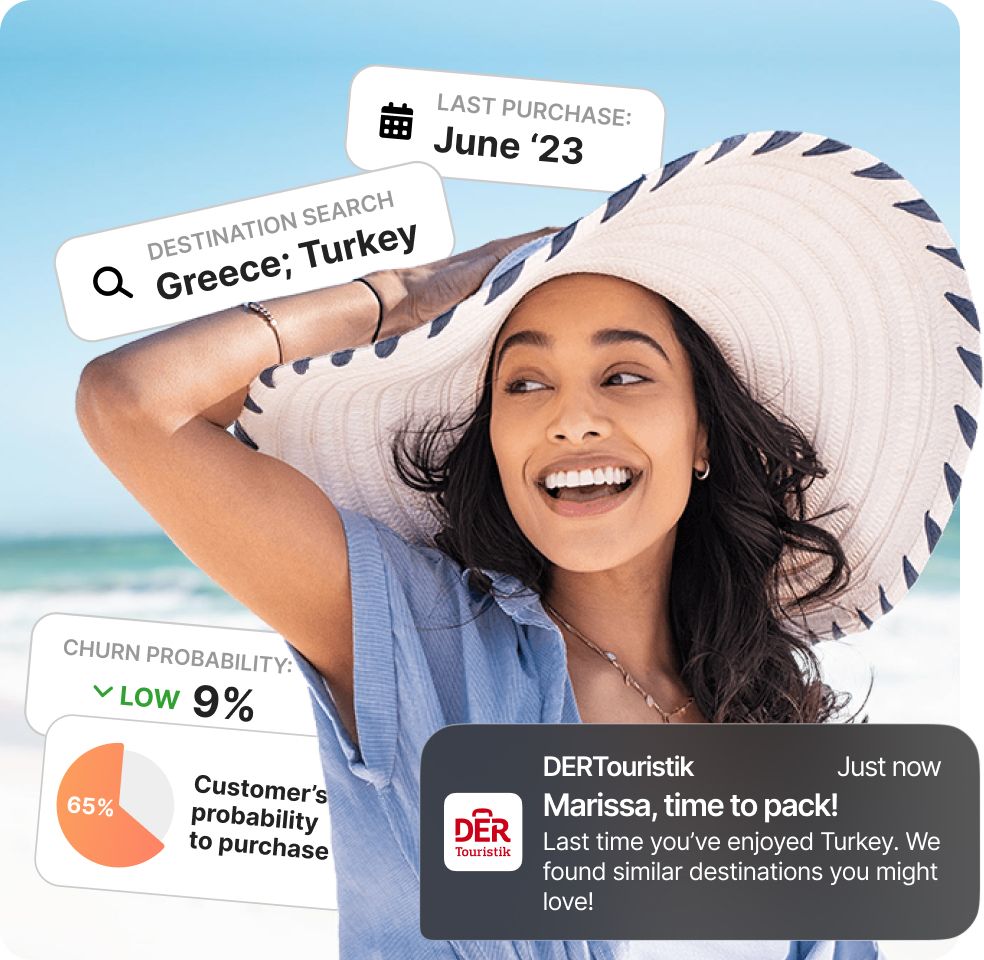
DER Touristik, leading travel company in Europe, improves marketing ROI with Meiro CDP
Read the success story → -
 Banking
Meiro Helps Komerční Banka Build On-Premise Digital Analytics Solution
Read the success story →